Trending

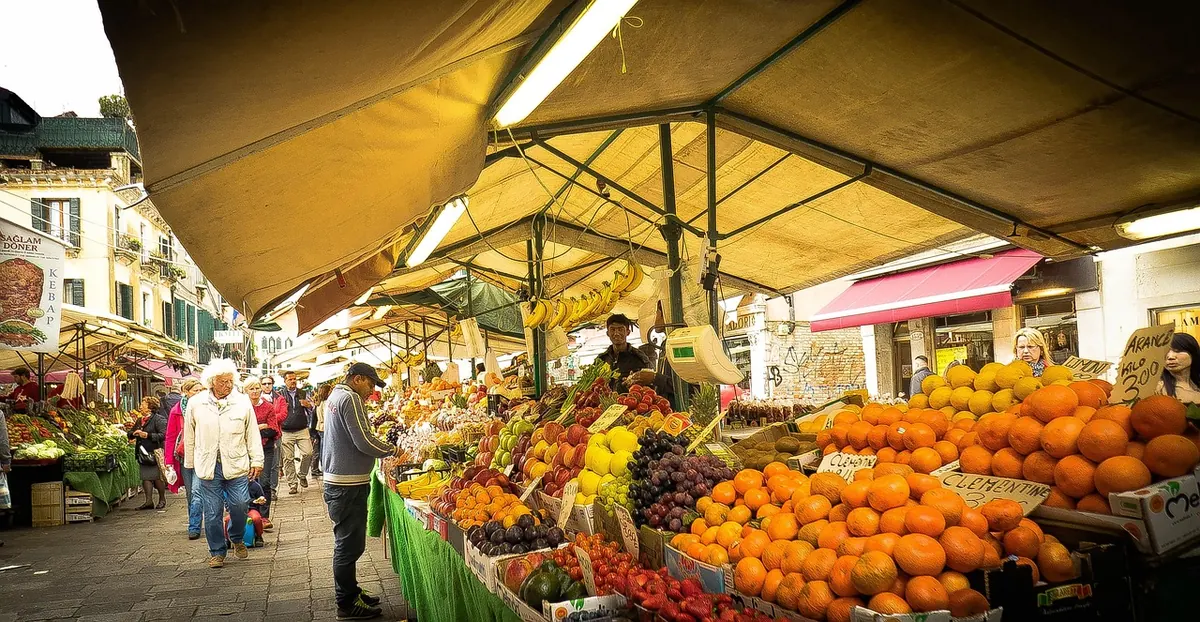
Market day in the Dales has its own rhythm. Vans roll into the square well before six, awnings crack open, and by half past eight the smell of frying bacon is arguing with the smell of wet cobbles. By eleven the square is full of people with bulging bags, someone is tuning a fiddle badly, and a stallholder is telling a farmer that yes, that is the price. Then, by four, the whole thing folds itself away and the cobbles go back to being cobbles.
If you time a trip to the Dales around a market, you get more than shopping. You get the town doing what it has done for centuries, plus the best chance of buying food that was picked, baked or cured within sight of the hills. Here is how the week shapes up, and what each town is genuinely good at.
Most outdoor markets open around half past eight or nine and wind down between two and four. The two golden rules hold everywhere: produce goes early, bargains go late. If you want the good cheese, the last of the decent tomatoes or the bread that has not been raked through, be there before ten. If you want a box of mixed plants or a job lot of tools for a fiver, turn up at two when stallholders cannot face packing the van.
Livestock auctions are a different animal entirely, often starting much earlier and dealing in loud, fast numbers you may not follow. Watching is fascinating; buying usually requires knowing what you are doing. Tennants Auctioneers in Leyburn runs viewing days and sales that are far more welcoming to a curious visitor.
Take cash. Most stalls have card readers now, but signal in a stone-built square can be politely useless, and the person selling soggy dahlias out of a wheelbarrow will not have one. Parking fills fast on market morning, so check whether your chosen town uses a disc scheme or paid parking before you set off.
Days below are the regular pattern, but bank holidays, fairs and the odd cattle sale can shuffle things. A quick look at the town council website or the local noticeboard the day before saves a wasted drive.
Grassington, Kettlewell and several smaller villages run seasonal or monthly markets rather than weekly ones. If you are staying in a village hall sort of place, ask at the shop — that is where the dates live.
Hawes on Tuesday is the cheese town, and not subtly. Wensleydale is made here, and the market is the place to buy it: ask for a taste, ask whether it is young and crumbly or older and creamier, and decide which you prefer rather than accepting whichever is handed over. Add a pork pie, some local bacon, and a bag of black pudding if you are cooking breakfast.
Skipton on any of its four market days is the practical one — fruit and veg, fish, plants, household bits, a butcher's stall, and enough choice that you can do a full week's shop in twenty minutes. Leyburn's Friday market is strong on meat and baked goods and has a friendly, no-nonsense feel. Richmond on Saturday is the best all-rounder for a mixed basket, with a good line in preserves, coffee and cakes.
Cool-bag advice worth repeating: hard cheese and cured meat will happily ride in a car boot on a cool day, but soft cheese, cream and anything raw needs to go home promptly. Plan the market as your last stop before the drive back, not the first of a four-hour outing.
Leyburn punches far above its size. Alongside the Friday market, Tennants holds sales of furniture, ceramics, jewellery and the general flotsam of Dales houses, and the viewing days are free, warm and genuinely entertaining. It is the sort of place where you learn what a Victorian jelly mould is worth.
Skipton has a cluster of antique shops and a market that runs to house-clearance stalls at the cheaper end — brass, tools, odd china, the occasional very good print that nobody has looked at properly. Richmond's Saturday market throws in old tools, spoons and boxes of postcards, and the lanes off the square hide proper dealers.
Sedbergh on Wednesday is Britain's official Book Town, which means second-hand bookshops, a market, and the pleasant sense that time has slowed down. Bring a bag with a sturdy handle.
Buy what you like the look of, ask directly about condition and repairs, and get a written receipt for anything expensive. On a serious purchase, take proper specialist advice before you commit.
Half the pleasure is pairing the market with a few miles of walking. Hawes on Tuesday, then out to Hardraw for the waterfall and back via the museum. Settle on Tuesday, then a stretch of the Settle–Carlisle line or a wander up to Stainforth. Kirkby Lonsdale on Thursday, then the walk to Ruskin's View over the Lune — short, easy, and worth every step. Masham on Wednesday or Saturday, finishing at one of the town's breweries. Richmond on Saturday, down to the river and back up through the castle grounds.
Do that and a Dales market stops being a stop-off and becomes the reason for the trip. Pick a town, match it to a day, and go hungry.
Photo: Michelle-Maria / Pixabay